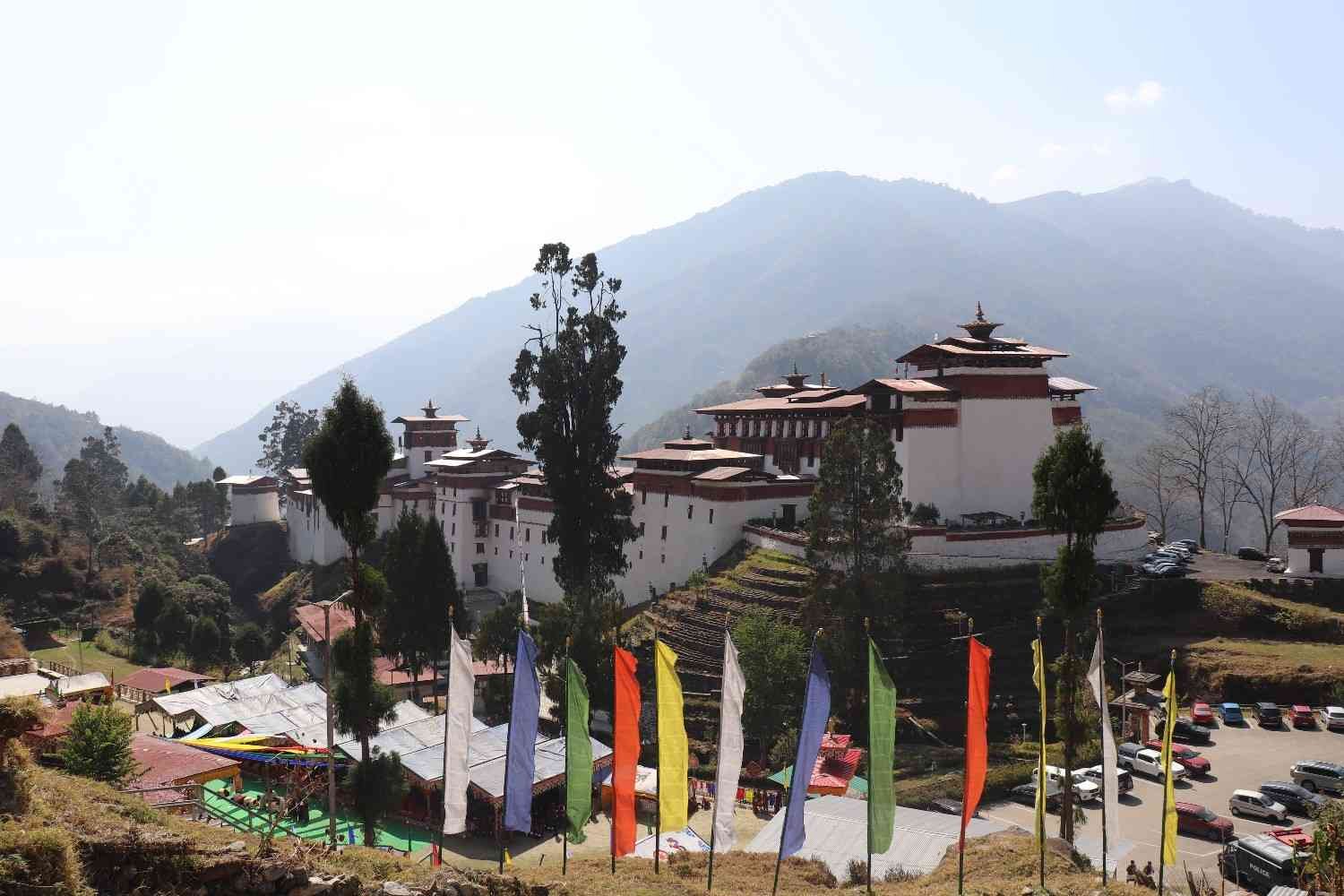
Wangdue Phodrang is renowned for its dynamic culture and scenic diversity, which combine rich traditions with breathtaking surroundings. Perched at the meeting point of two rivers, the famous Wangdue Phodrang Dzong represents tenacity and history. The neighbourhood serves as an entrance to the stunning Phobjikha Valley, a tranquil sanctuary renowned for its expansive vistas and as the winter home of the endangered Black-necked crane. Wangdue Phodrang provides the ideal blend of natural beauty and cultural discovery with its undulating hills, quaint towns, and spiritual atmosphere.
Why Visit Wangdue Phodrang
Wangdue Phodrang sits at the confluence of the Punakha and Dang Chhu rivers and marks the gateway to central Bhutan, known for its traditional stone and slate craftsmanship.
Things to See
- Wangdue Phodrang Dzong — rebuilt after a 2012 fire, overlooking the river confluence.
- Rinchengang village — known for its traditional stonework.
Things to Do
A short walk around the dzong and a stop in Rinchengang village to see traditional stone-slate building techniques.
Best Time to Visit
Year-round — Wangdue is usually paired with a Punakha stay rather than visited separately.
How to Reach
Just beyond Punakha on the road toward central Bhutan and Phobjikha.
Festivals & Events
Wangdue Tshechu — typically held in autumn.
Nearby Attractions
Punakha and Phobjikha Valley, both close by.
Travel Tips
Most visitors pass through Wangdue as a short stop between Punakha and Phobjikha rather than staying overnight.
FAQs
Is Wangdue worth a dedicated stop? It's usually combined with Punakha or as a stop en route to Phobjikha rather than visited on its own.
Featured Tour Packages
Browse through our curated tour packages designed to suit every traveler's dream.