Bhutanese culture is not a tourist backdrop — it's a living, government-protected framework that shapes everyday life.
Religion
Vajrayana Buddhism (a branch of Tibetan Buddhism) is the dominant faith and deeply woven into public life — prayer flags, chortens (stupas) and monasteries are everywhere, and monastic bodies retain real influence in governance.
National dress
The gho (a knee-length robe for men) and kira (an ankle-length wrapped dress for women) are mandatory in government buildings, schools and formal settings, and are still worn daily by many Bhutanese rather than reserved for special occasions.
Architecture
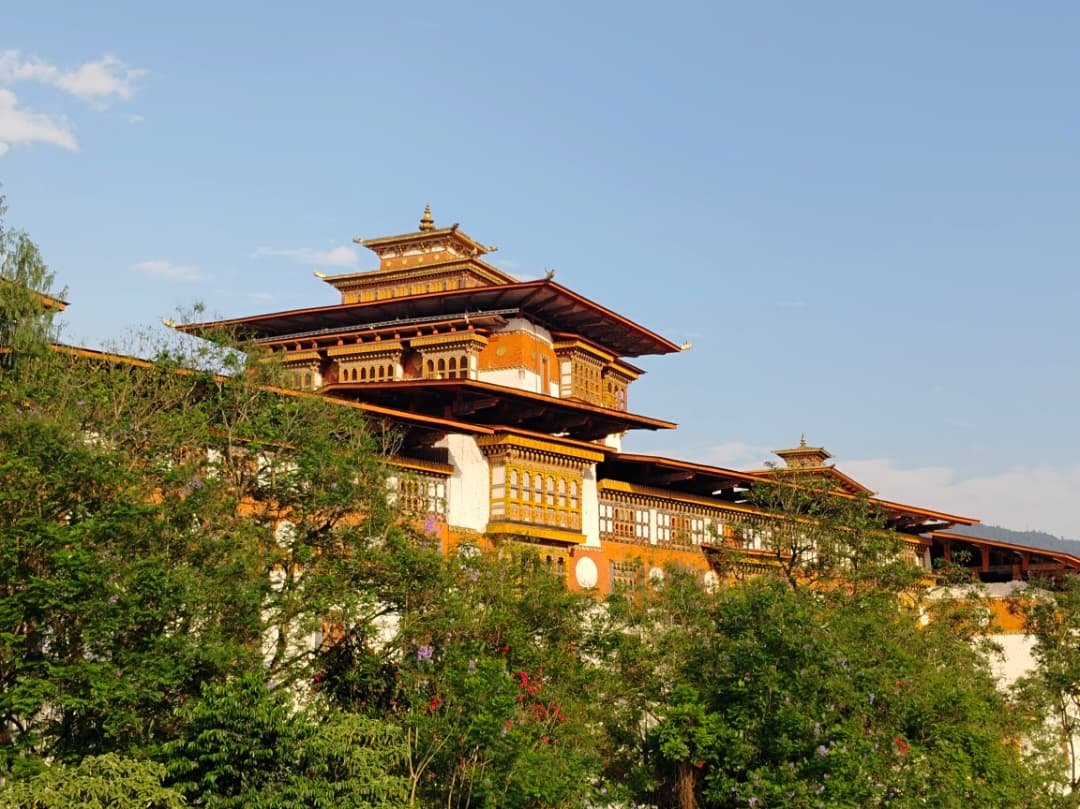
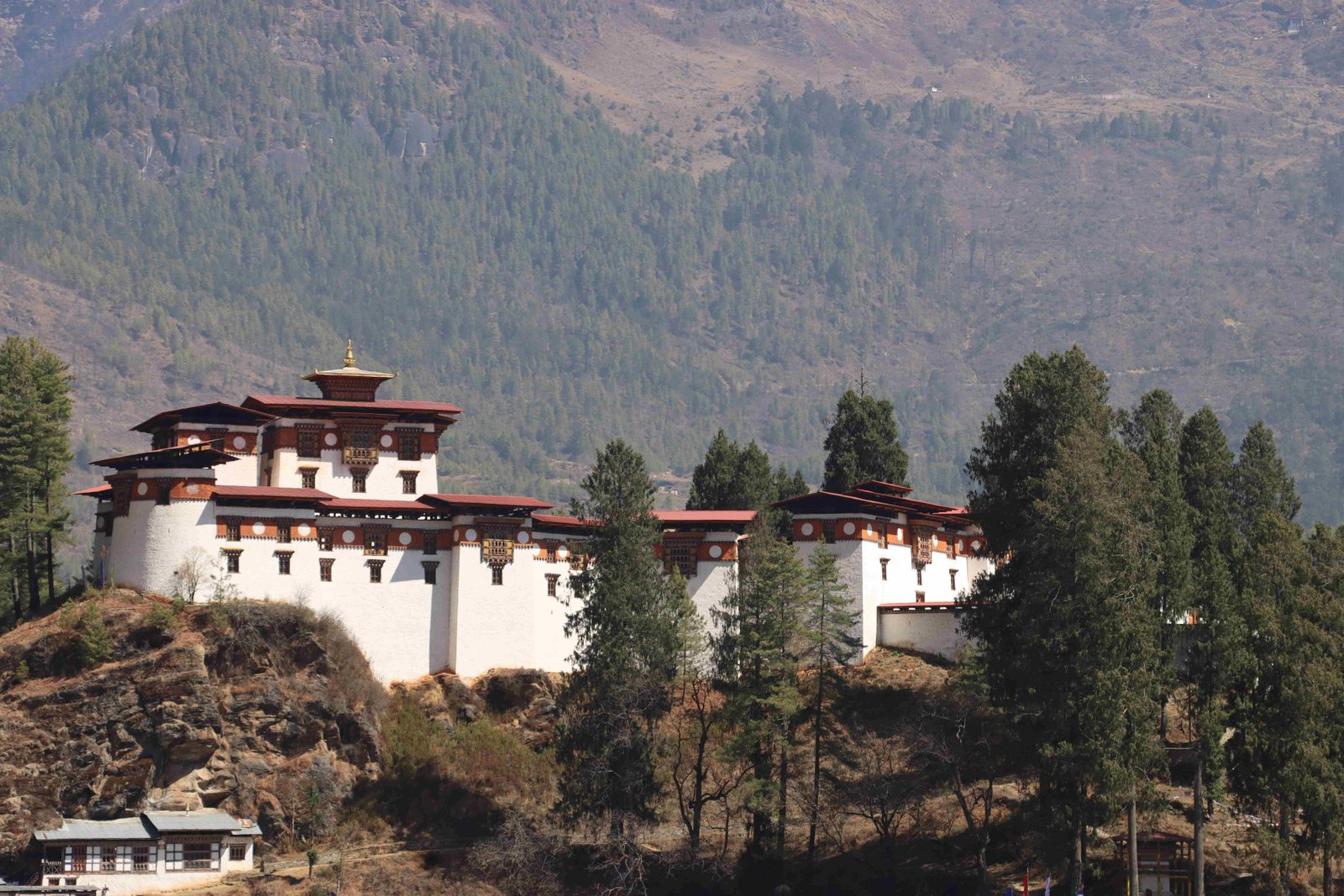
Traditional Bhutanese buildings — from farmhouses to dzongs — follow strict design codes: whitewashed walls, ornately carved and painted wooden windows, and sloped roofs, built without nails in the traditional method. Modern buildings, even in cities, are legally required to follow these traditional aesthetic guidelines.
Gross National Happiness
Bhutan's guiding development philosophy, formalised since the 1970s, evaluates national progress across four pillars: sustainable development, environmental conservation, cultural preservation, and good governance — not GDP alone.
Etiquette for visitors
- Dress modestly, particularly at religious sites — shoulders and knees covered.
- Remove shoes and hats before entering temples and dzongs; photography is often restricted inside.
- Walk clockwise around religious structures (chortens, prayer wheels, mani walls).
- Ask before photographing monks or locals directly.
See also Bhutanese food and festivals for more on culture in practice.